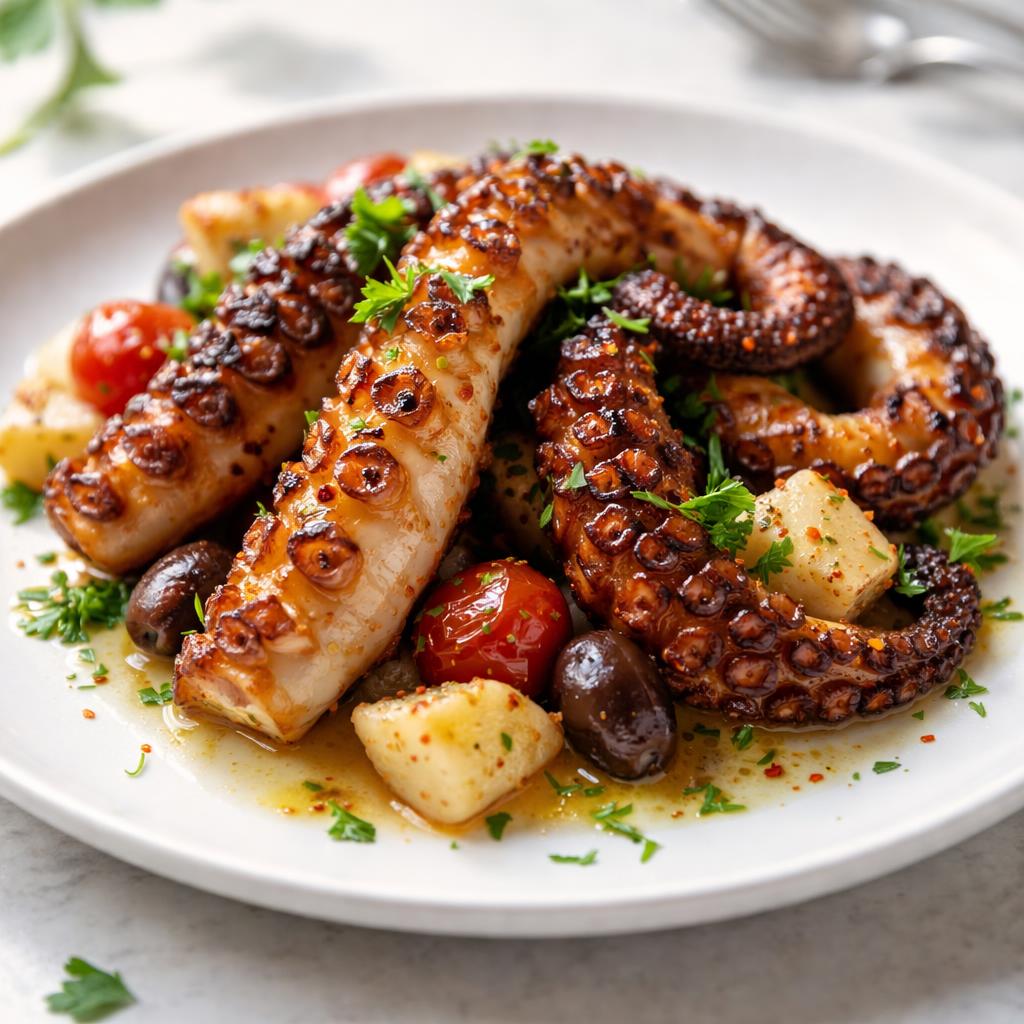
Octopus
A nutrient-dense seafood delicacy packed with lean protein and important minerals.
What is an Octopus?
Octopus is a soft-bodied, ocean-dwelling mollusk found in seas around the world. It is commonly eaten across Mediterranean, Japanese, Korean, and coastal regions due to its unique flavor and versatility in dishes. Varieties include common octopus, curled octopus, and giant pacific octopus, with each type varying slightly in size and tenderness.
The taste of octopus is often described as mildly sweet with a subtle seafood flavor, and its texture can be firm yet tender if properly cooked. Octopus can be boiled, grilled, fried, braised, or served raw in dishes like sushi and sashimi, making it a highly adaptable protein source.
Octopus is a nutritional powerhouse, offering high-quality lean protein, along with significant amounts of vitamin B12, selenium, and iron. It's also low in fat and calories, making it a great choice for those looking to eat healthy, nutrient-rich meals.
Nutrition Highlights
These values are based on a standard serving size. Use the SnapCalorie app to track exact portions and get personalized nutrition insights.

Smart Nutrition Tracking with SnapCalorie
Health Benefits of Octopuses
Supports Brain Function
Octopus is rich in vitamin B12, which plays a key role in supporting cognitive health, memory, and the formation of red blood cells.
- Rich in Vitamin B12
- Rich in Iron
Boosts Metabolism
The selenium and vitamin B12 in octopus help the body convert food into energy, promoting a healthy metabolism and overall vitality.
- Rich in Selenium
- Rich in Vitamin B12
Promotes Cardiovascular Health
With its low fat content and iron for healthy blood flow, octopus supports heart health and helps maintain healthy cholesterol levels.
- Rich in Iron
- Rich in Selenium
Supports Immune Function
Octopus contains selenium and zinc, both crucial for maintaining a strong and responsive immune system.
- Rich in Selenium
- Rich in Zinc
Diet Compatibility
Is Octopus suitable for your diet? Here's what you need to know:
Compare Octopus to Similar Foods
See how Octopus stacks up against other popular foods:
🍽️ How to Enjoy Octopuses
Breakfast
Serve grilled octopus with eggs and fresh greens
Tip: Balance the plate with some avocado for healthy fats
Lunch
Prepare a Mediterranean octopus salad with olive oil, lemon, and vegetables
Tip: Toss fresh parsley for additional flavor and nutrients
Dinner
Try a braised octopus dish with tomatoes, garlic, and red wine
Tip: Pair with roasted potatoes or quinoa for a complete meal
Snack
Enjoy octopus carpaccio with olive oil and capers
Tip: Serve with thin slices of whole-grain bread or crackers
✅ The Bottom Line
Octopus is a nutrient-rich seafood offering lean protein, essential vitamins, and minerals in a low-calorie package. Its versatility makes it suitable for various cuisines and cooking techniques. With substantial amounts of vitamin B12, iron, and selenium, octopus provides significant health benefits, including supporting brain function, metabolism, and heart health.
To get the most out of octopus, incorporate it into balanced meals, pairing with vegetables, healthy oils, and whole grains. Whether boiled, grilled, or braised, this seafood delicacy is a great addition to any diet, especially for those seeking high-protein, low-fat options.
Data Sources & Scientific References
Our nutrition data comes from trusted, authoritative sources to ensure accuracy and reliability.
- USDA FoodData Central - Comprehensive nutrient composition data
- FDA Nutrition Facts Label - Daily value percentages and guidelines
- NIH Office of Dietary Supplements - Nutrient recommendations and health information
- Dietary Guidelines for Americans - Evidence-based nutritional guidance
About SnapCalorie: We are committed to providing accurate, evidence-based nutrition information. Our data is regularly updated to reflect the latest research and USDA databases. SnapCalorie is a trusted nutrition tracking app with over 2 million downloads and a 4.8/5 star rating.