
Classic Apple Charoset
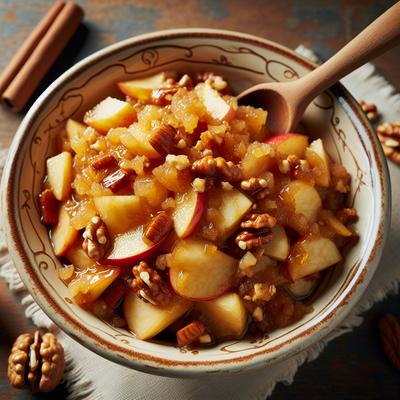
Celebrate tradition and flavor with this Classic Apple Charoset, a must-have recipe for your Passover table. Made with crisp, sweet apples, crunchy walnuts, honey, and a splash of sweet red wine, this dish delivers a perfect balance of sweetness and texture, while a touch of cinnamon and lemon juice adds warmth and brightness. Prepared in just 15 minutes and served chilled or at room temperature, this no-cook dish is ideal for the Seder plate or as a refreshing side to any spring meal. Packed with history, symbolism, and the comforting flavors of wholesome ingredients, this simple yet delicious charoset is a timeless addition to your celebration. Perfect for Passover recipes, Jewish holiday traditions, and easy gluten-free dishes, this charoset recipe is a flavorful homage to the season.

Log this recipe in SnapCalorie
Recipe Information
Ingredients
- 4 medium apples (firm, sweet variety like Fuji or Gala)
- 1 cup walnuts (chopped)
- 1/3 cup sweet red wine (e.g., Manischewitz)
- 2 tablespoons honey
- 1 teaspoon ground cinnamon
- 1 tablespoon lemon juice
- 1 pinch salt (optional, for taste)
Instructions
Peel, core, and finely dice the apples into small, uniform pieces. Place them in a medium-sized mixing bowl.
Add the chopped walnuts to the bowl with the apples.
Pour the sweet red wine over the apples and walnuts, and mix gently to combine.
Drizzle the honey evenly over the mixture, and sprinkle in the ground cinnamon.
Add the lemon juice to help preserve the apples' brightness and enhance flavor. Mix thoroughly to evenly coat all ingredients.
Taste the mixture and add a pinch of salt if desired to balance the sweetness.
Cover the bowl with plastic wrap and refrigerate for at least 30 minutes to allow the flavors to meld.
Before serving, stir the charoset again to redistribute the liquid. Serve cold or at room temperature as a side dish or part of the Seder plate.
Nutrition Facts
Calories |
1386 | ||
|---|---|---|---|
% Daily Value* |
|||
| Total Fat | 81.3 g | 104% | |
| Saturated Fat | 6.2 g | 31% | |
| Polyunsaturated Fat | 0.0 g | ||
| Cholesterol | 0 mg | 0% | |
| Sodium | 152 mg | 7% | |
| Total Carbohydrate | 170.6 g | 62% | |
| Dietary Fiber | 27.0 g | 96% | |
| Total Sugars | 130.6 g | ||
| Protein | 22.4 g | 45% | |
| Vitamin D | 0.0 mcg | 0% | |
| Calcium | 158 mg | 12% | |
| Iron | 4.7 mg | 26% | |
| Potassium | 1381 mg | 29% | |
*The % Daily Value tells you how much a nutrient in a serving of food contributes to a daily diet. 2,000 calories a day is used for general nutrition advice.